MAIO 2026 Results Announced
Kuala Lumpur, Malaysia - Mar 23, 2026
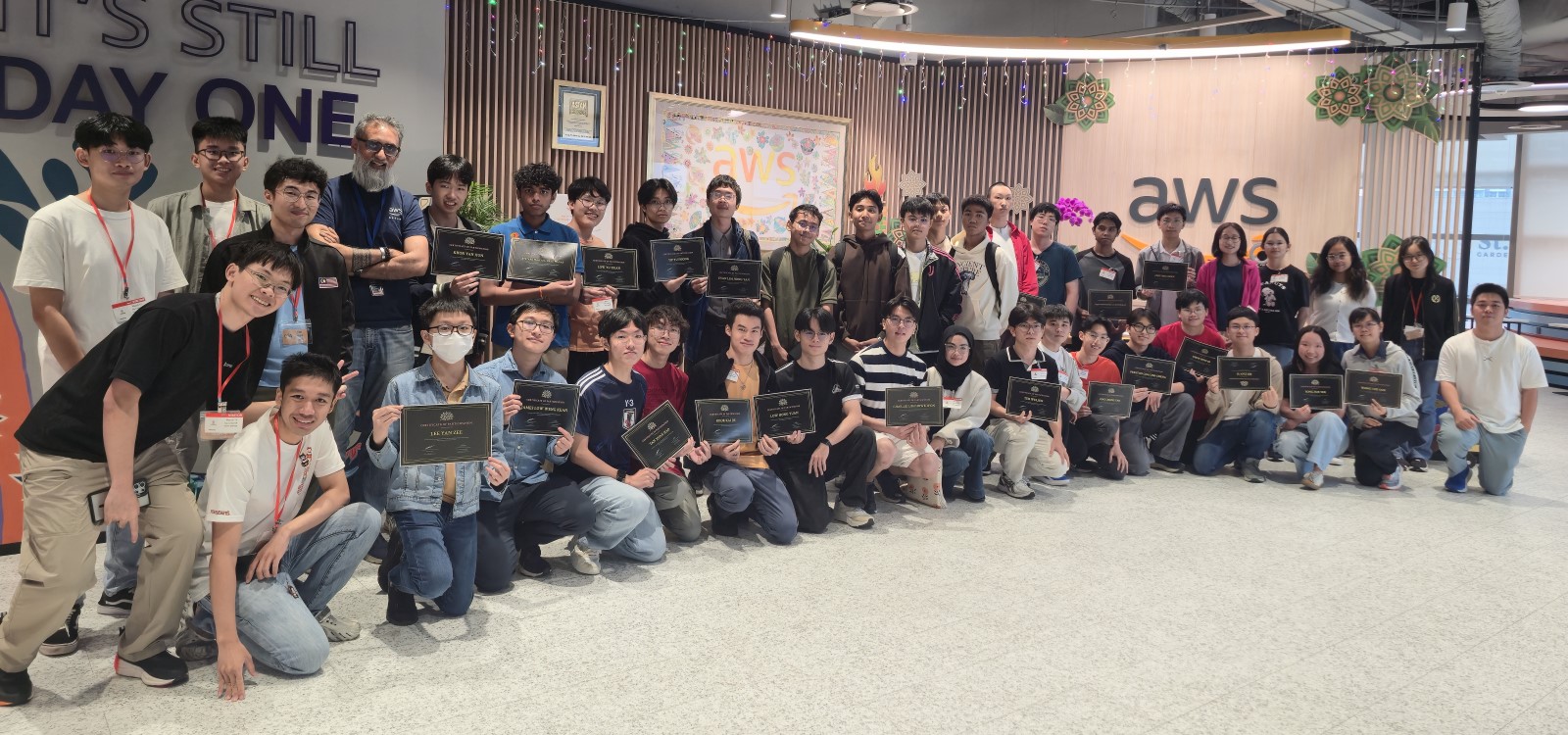
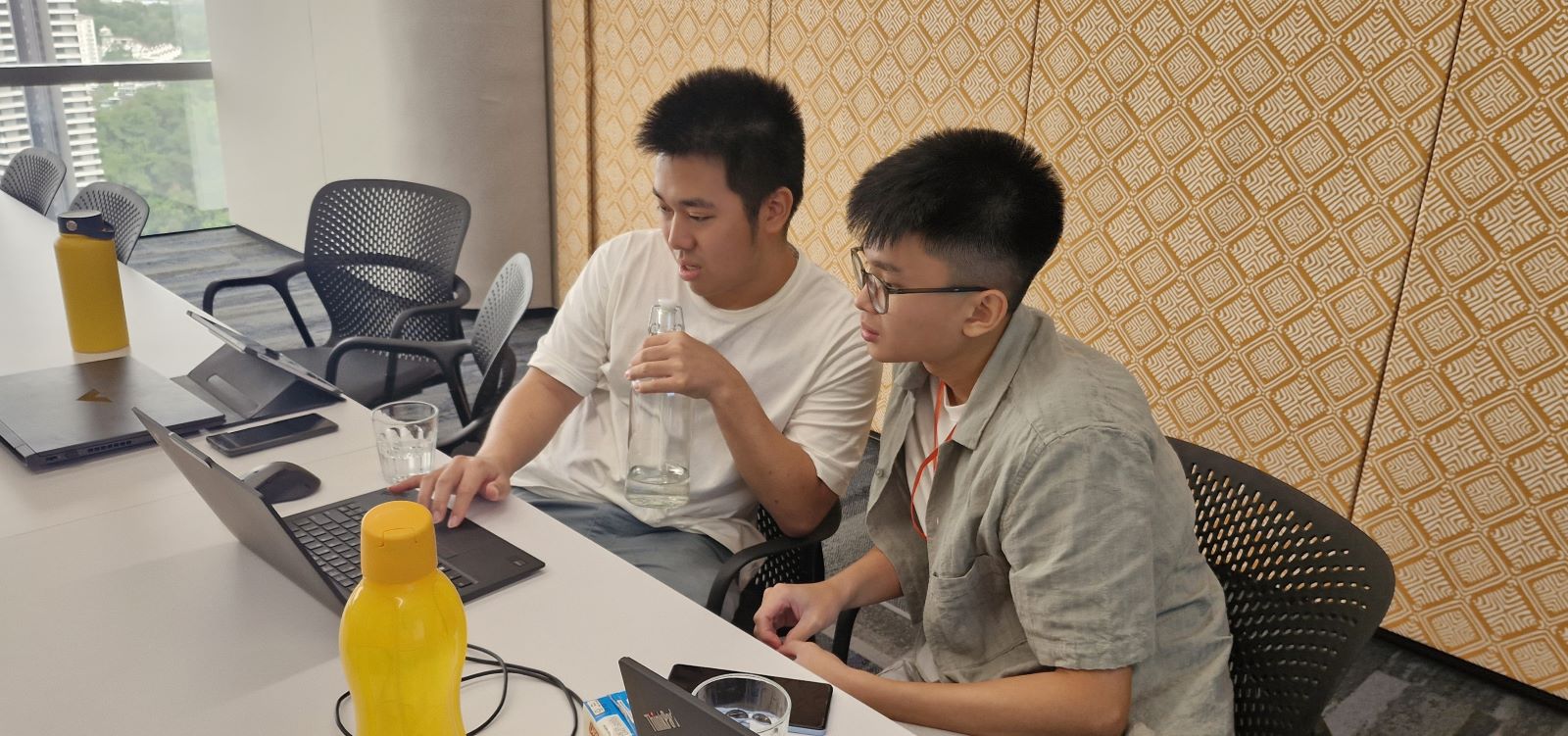
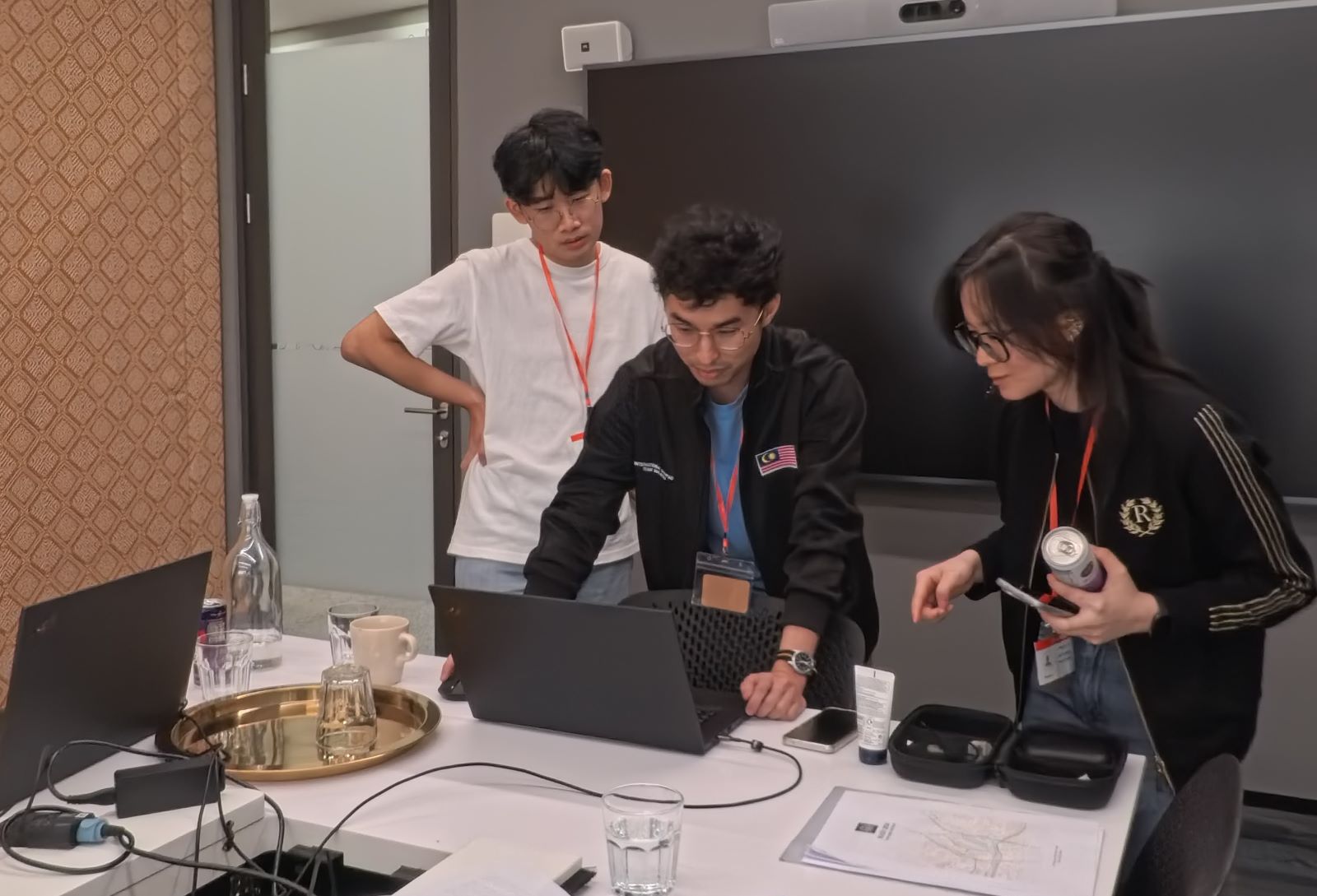
Malaysia AI Olympiad 2026 has concluded on March 15, 2026! Of the 50 students invited from the MAIO Online Qualifiers held over February 21–22, 37 students made it to the in-person competition in Kuala Lumpur for a full day of hands-on AI challenges.
Lead-up to MAIO 2026
Close to 130 students signed up for the MAIO Online Qualifiers. To help them prepare, we hosted a series of three public lectures in January and February, walking through past olympiad-style problems and introducing key concepts. The lectures were held online and recordings were made available afterwards.
Participants then sat the MAIO Online Qualifiers over the weekend of February 21–22, where participants had a 40-hour open window to submit solutions for two olympiad problems. The top 50 scorers were invited to the in-person finals in Kuala Lumpur.
From public lectures to online qualifiers to the onsite finals, the entire programme is free of charge to participants, including meals and certificates on the day. This has been the case since MAIO’s first edition.
Updated Onsite Competition Format
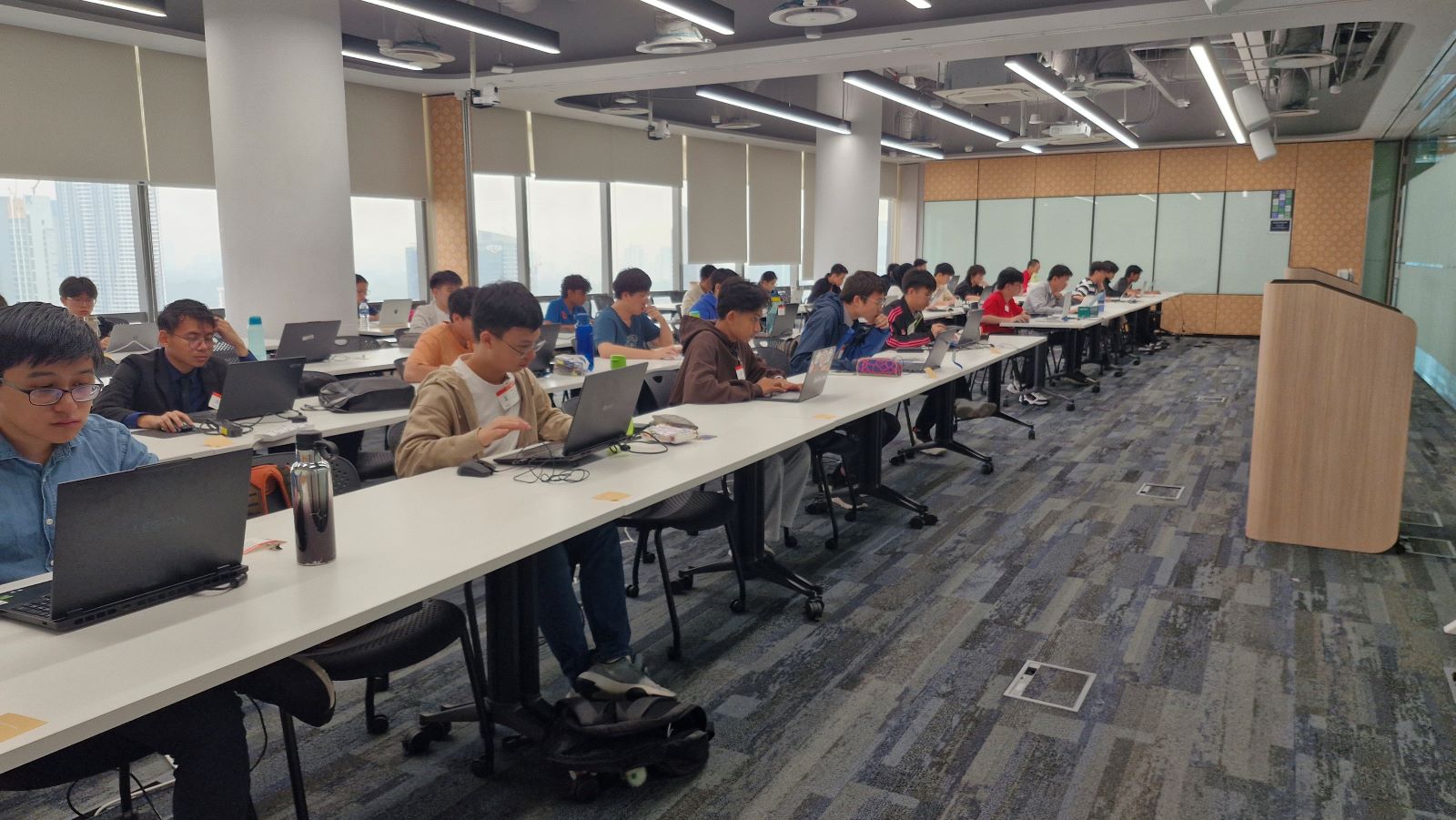
MAIO 2026 introduced a significantly different competition structure. This was the first time MAIO was held fully onsite, and instead of the previous year’s format of 48 hours over a weekend and online, participants competed in two separate three-hour sessions on the same day; one in the morning and one in the afternoon. Each session featured two problems, giving students roughly 90 minutes per problem on average.
All four challenges were hosted on our in-house Coralrose Competitions Platform, where students downloaded competition notebooks and made submissions via API. This year, participants were permitted to use AI assistance through web portals, though agentic coding tools were not allowed.
MAIO 2026 Medallists
In line with international olympiad conventions, medals were distributed among the top-performing participants in a 1:2:3 ratio. For MAIO 2026, this resulted in 3 Gold, 6 Silver, and 9 Bronze medals.
The following are the medallists of MAIO 2026:
Gold medallists:
- Khor Yan Xun
- Ong Chong Yao
- Tam Chen Wee
Silver medallists:
- Low Yu Xuan
- Jayden Lim Jia De
- Lee Yan Zee
- Wong Tze San
- Chon Feng Qi
- Hii Zan Yi
Bronze medallists:
- Teh Wei Jun
- Preston Chai Zhi Cheng
- Chia-Wei Liew
- James Low Weng Kean
- Low Hong Yuan
- Ryan Kua Yi Jie
- Tan Yu Xuan
- Khor Kai Jie
- Chua Tan Li Ming
Score Distribution
The four problems were ordered by increasing difficulty. Most problems also include an EX extension: a notably harder subtask that builds on the same problem but pushes further, scored separately and distinguished with the EX label. Think of it as extra credit for those who finish early and want a tougher challenge.
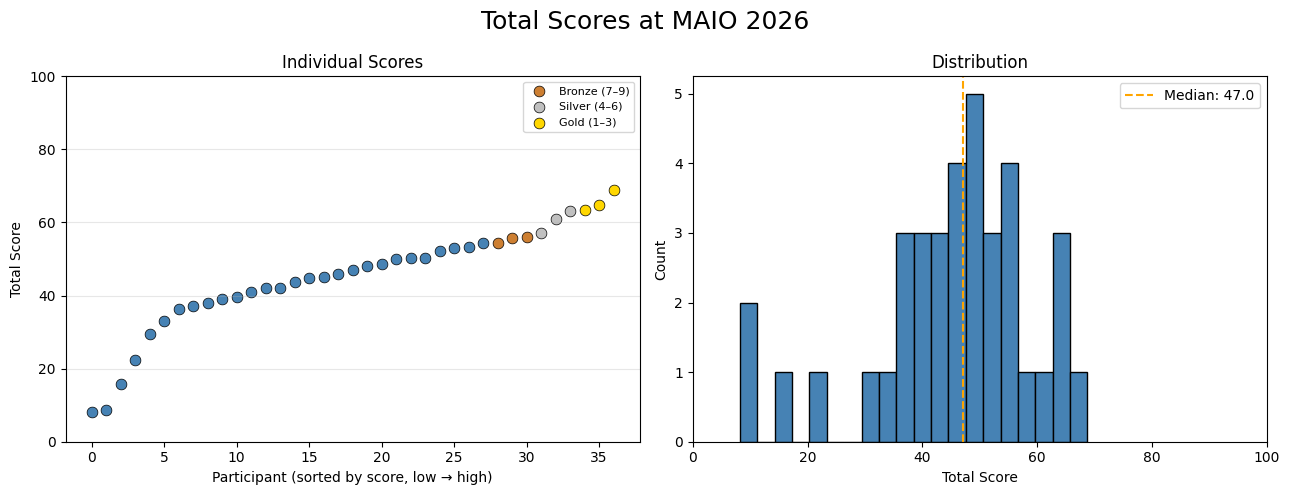
Total scores ranged from just under 10 to 69 out of 100, with a median of 47.
Morning session: Ghost Hydrant + Draw Quick
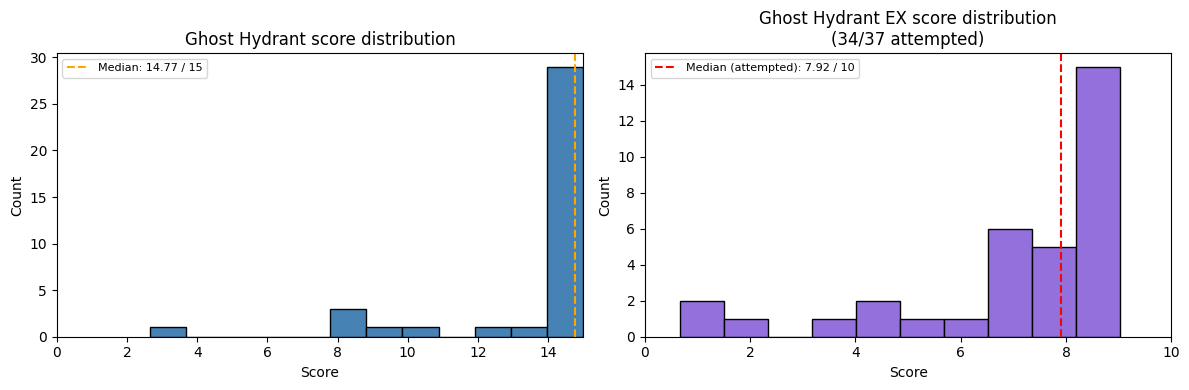
Ghost Hydrant opened the competition gently. The base problem (out of 15) saw a median of 14.77 with 29 participants scoring full marks, and 34 of 37 went on to attempt the EX extension. A strong start for most of the field.
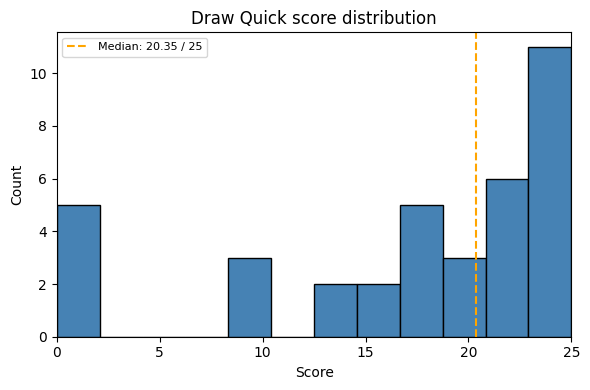
Draw Quick (out of 25) introduced the first real spread, with a bimodal distribution: a cluster of participants scoring near zero, and another at the high end. Those who found their footing tended to score well, but there was a conceptual threshold that some couldn’t clear in time.
Afternoon session: Panda MNIST + Scriptio Continua
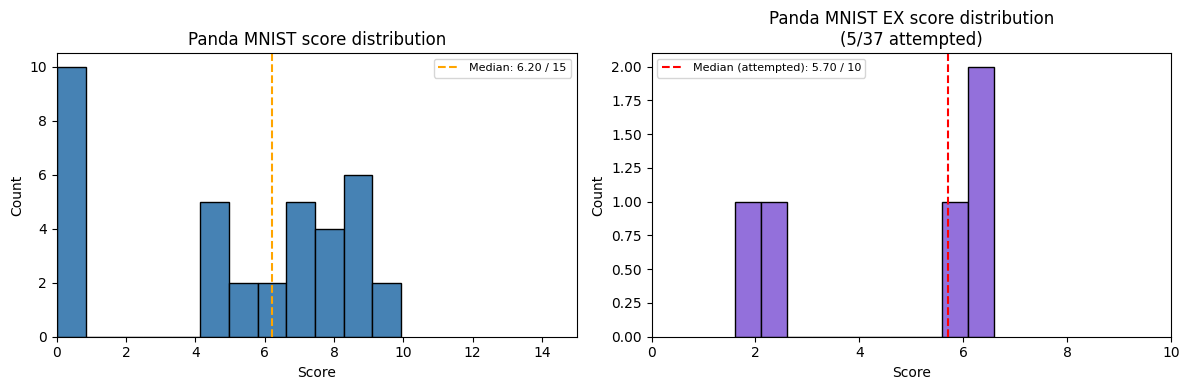
Panda MNIST (out of 15) marked a sharp increase in difficulty: 10 of 37 participants did not score points, and the median dropped to 6.20. Only 5 participants went on to attempt the EX extension.
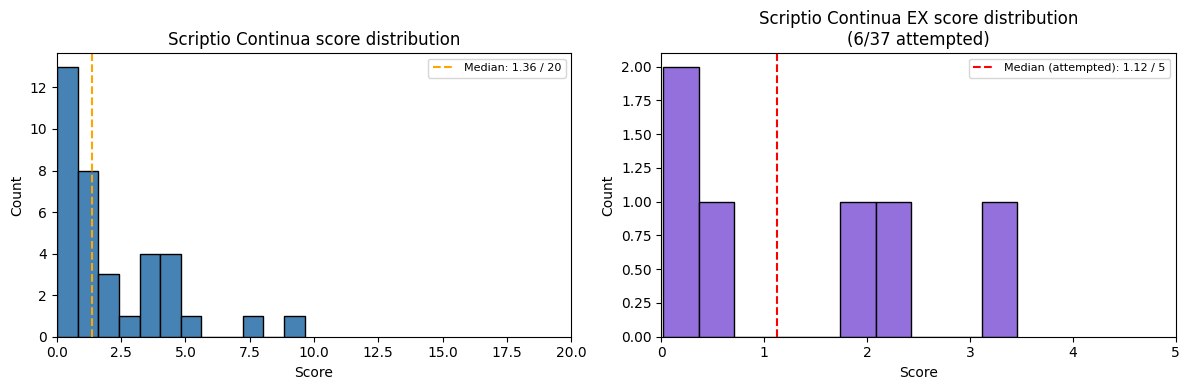
Scriptio Continua was the wall problem. With a median of just 1.36 out of 20, 13 participants scored zero and most others remained in low single digits. Only 6 attempted the EX extension.
What Comes Next
All 18 MAIO 2026 medallists, along with the five highest-scoring non-medallists, are invited to the 2026 MAIO Training and Selection Programme (TSP). In addition, all participants from the 2025 cohort who advanced to the final team selection round are invited back as returning members.
The TSP is a fully online, semester-length programme running from late March through to end of May, culminating in the Malaysian Invitational Examination which serves as the final selection test. The programme covers machine learning and deep learning fundamentals, designed specifically for high school students without prior university-level prerequisites. All invitees have the opportunity to be selected for Team Malaysia at IOAI 2026, to be held in Kazakhstan from August 2–8, 2026.
Thank you to all who prepared for and participated in MAIO 2026. We hope the competition has given you a taste of what rigorous AI problem-solving looks like, and we look forward to seeing many of you in the TSP. We also apologise for the delay in score announcements due to technical issues with our autograder; we appreciate your patience. Maaf zahir dan batin, and belated Selamat Hari Raya Aidilfitri!
Tan Nian Wei
Head coach and Malaysia team lead
Malaysia AI Olympiad Committee
Acknowledgements
We are grateful to the following for making MAIO 2026 possible:
Venue host: Thank you to Ghaz Iqbal of Amazon Web Services (AWS) for generously opening their venue to us on a Sunday!
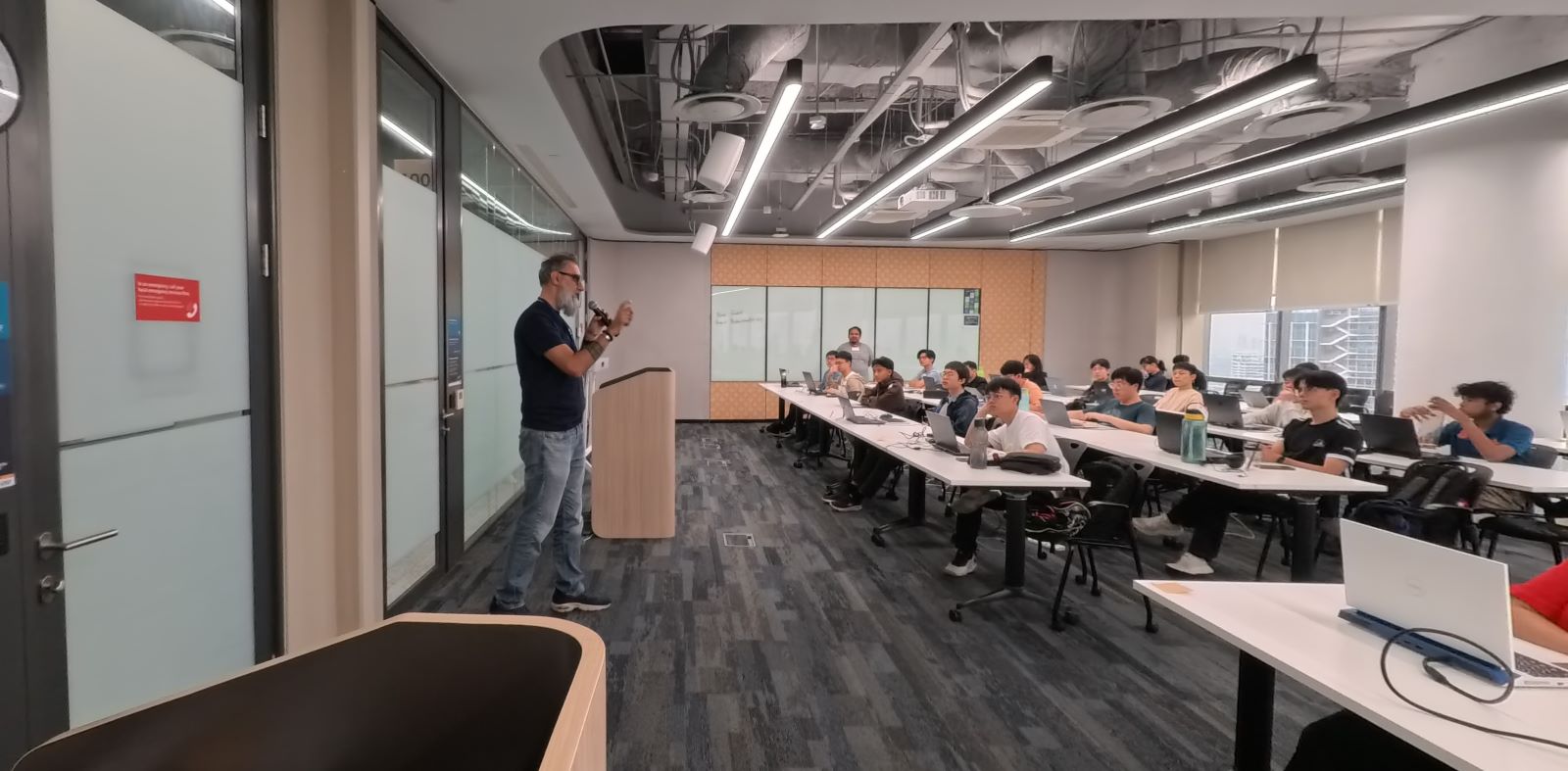
MAIO Fellows: Guo Jun, Ming Wen, Yang Eng, Zi Hong
Site Volunteers: Angeline, Brendan Beh, Hong Bing
Event Planning: Kelly Lee
Sponsors: Thank you to the supporters & alumni of the Malaysian Computing Olympiad program for funding this event!
Parents and teachers: Last but not least, thank you to the parents and teachers who have supported our participants in their AI learning journey! None of this would be possible without you.
Citation:
@misc{maio2026results,
    title        = {MAIO 2026 Results Announced},
    author       = {Tan, Nian Wei},
    year         = {2026},
    howpublished = {Blog},
    url          = {https://aiolympiad.my/posts/maio-2026-results-announced},
}